


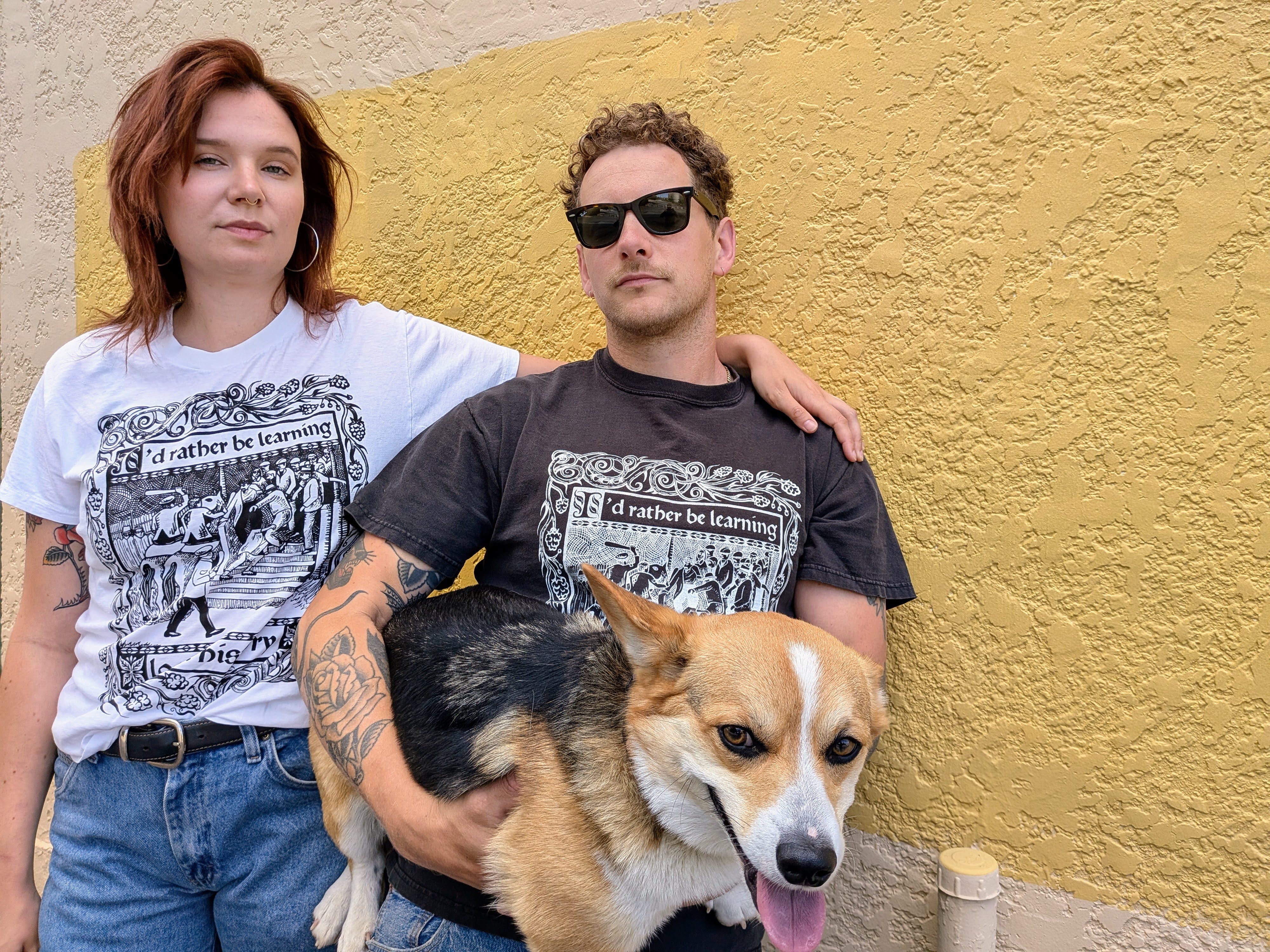
Artwork by Jude. Shirts by Kool Things. Silkscreen by Meghan Hildebrand.
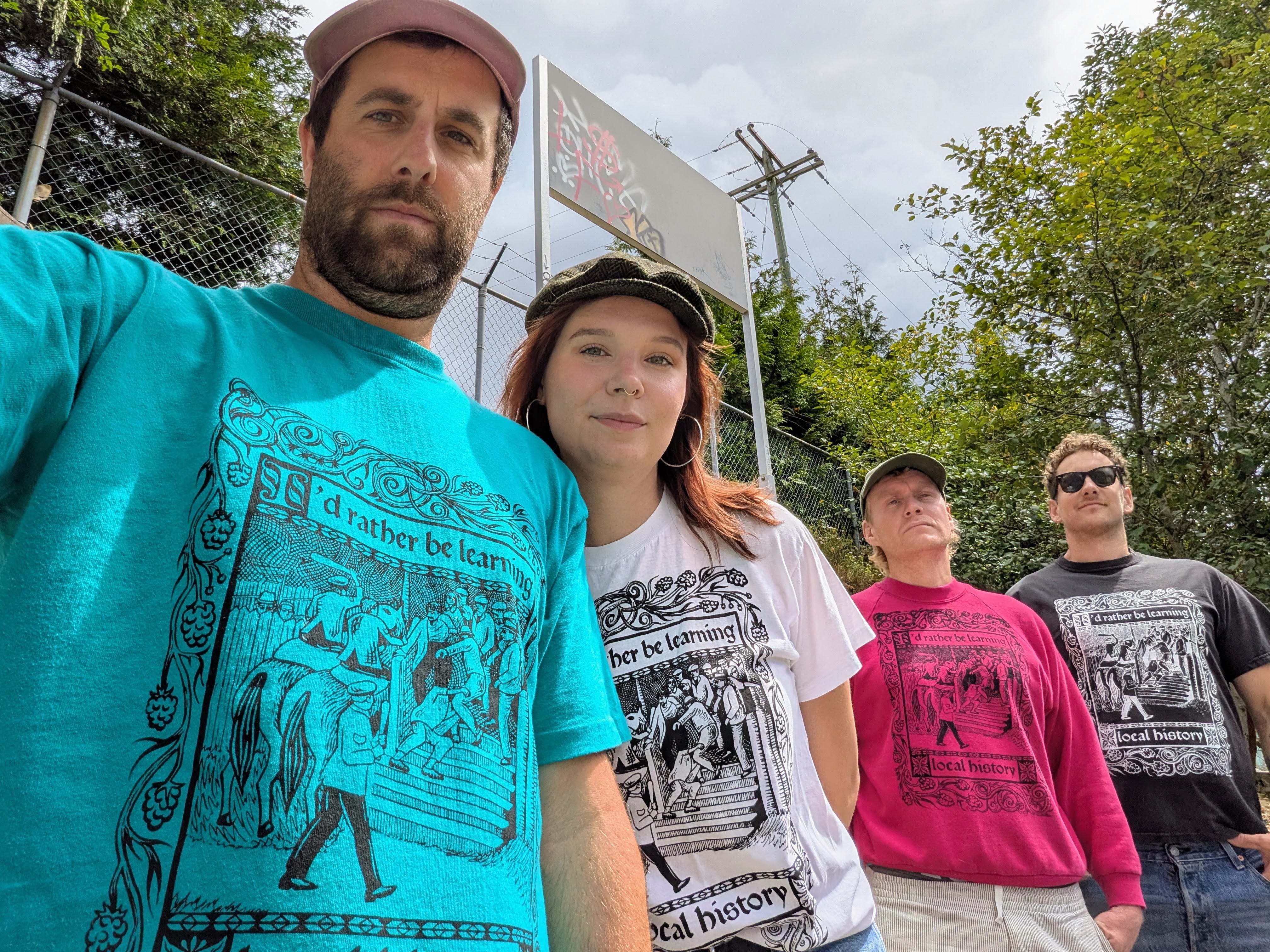
Selling for $30, all proceeds will be donated to the qathet Museum and Archives. If you want one, reply to this email, and we’ll arrange for pickup from my white cargo van. Selling in qathet only.
the original photo:
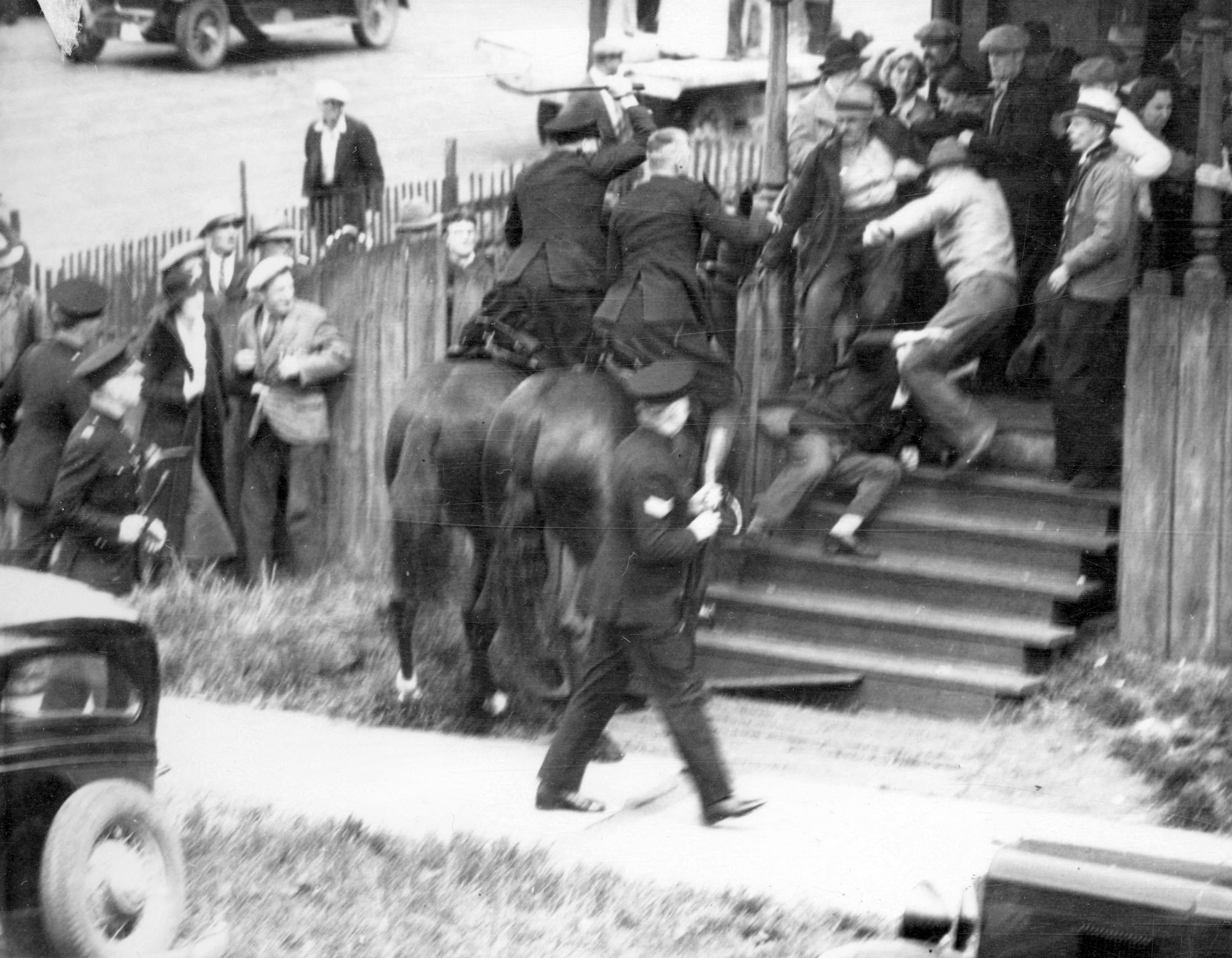
June 18, 1935. Baton-wielding cops rampage through Vancouver, smashing tear gas canisters through the windows of the Waterfront Workers’ Association and the Workers’ Unity League offices on East Hastings. RCMP machine gunners stand guard at the entrance to Vancouver’s busiest dock. A longshoreman lies bleeding on the street, blasted in the back of his legs by a police shotgun. The Longshoremen’s Women’s Auxiliary administers first aid to bruised and bloodied men at the Ukrainian Labour Temple.
It’s remembered as the Battle of Ballantyne Pier - and it all started because a handful of dockworkers in Powell River decided to go on strike.
In 1935, Powell River was deep in the throes of the Great Depression. Poverty was everywhere. Hundreds of unemployed men (alongside labour organisers and communists) were crowded into a government relief camp at Duck Lake, where they were paid twenty cents a day for backbreaking manual labour.
For those lucky enough to keep their jobs at the mill, things weren’t much better. As Barbara Lambart writes in Rusty Nails and Ration Books, “about half of the workers there worked only fourteen days a month, the other half eked out an existence by fishing, the odd day’s or hour’s work, relief and loafing.”
Laid-off workers, desperate for money, accepted contract work at a fraction of their old wages. As a one-company town, the Powell River Company had an outsized role in dictating terms. Defiant workers or anyone suspected of union sympathies were regularly fired, blacklisted, and kicked out of their company-owned homes. In solidarity, members of the Vancouver and District Waterfront Workers’ Association snuck into town and, meeting away from prying company eyes, helped fifty-one Powell River dock workers form their first union - The Powell River and District Waterfront Workers Association.
When the new union asked the Powell River Company to match its wages with those of Vancouver dock workers, the company locked them out and replaced them with non-union workers.
Immediately, longshoremen in Vancouver, Port Alberni, and Seattle refused to unload ships carrying “hot cargo” from the non-union dock in Powell River. Industry bosses were ready for the fight. In retaliation, the Shipping Federation locked out 900 union dock workers in Vancouver. With protection from armed police escorts, they brought in strikebreakers from the Vancouver Yacht Club to continue unloading Powell River cargo at Ballantyne Pier.
The striking dockworkers came up with a plan. On June 18, they would march en masse down to the pier and confront the scabs.
In the words of strike leader Ivan Emery, “[This strike] will be won by going down on ships and taking off strikebreakers… If we are refused [by police], we are going through anyhow.” Emery, like many of the marching longshoremen, was a hardened World War I veteran and had served in the same battalion as Vancouver’s Police Chief, William Foster.
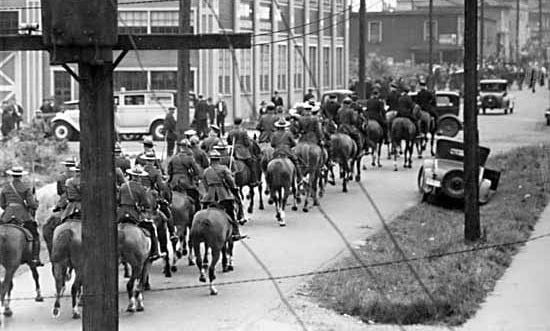
But, as they approached Ballantyne Pier, they were held back by a wall of baton-wielding cops and machine gunners. Undeterred, Emery bad-assedly said, “In the war, many of us faced the guns of the German army. Now we are faced with a squad of Mounties with machine guns behind them. I believe there are enough returned men among us willing to listen to the rattle of machine gun fire again. It is not bravado, it is not a challenge. It’s simply a chance to see if the workers in this country have got any rights.”
And so began the Battle of Ballantyne Pier. The skirmish lasted three hours, saw the first use of tear-gas on civilians in Canada, and ended with twenty-eight men in St. Paul’s Hospital. Dozens were arrested. Days later, Vancouver Mayor Gerry McGeer announced that the striking longshoremen would no longer be eligible for relief payments for themselves or their families.
Ultimately, the legacy of the Battle of Ballantyne Pier is ambiguous, but it undeniably marked a high tide of hardcore working-class militancy in BC. It’s an era with a few lessons for today.
nerdy notes about the shirt
The font is William Morris’ Golden Type, developed for use at his legendary Kelmscott Press
The floral surround, inspired by Morris’ gothic revival style, features blackberry brambles - qathet’s de facto floral emblem.
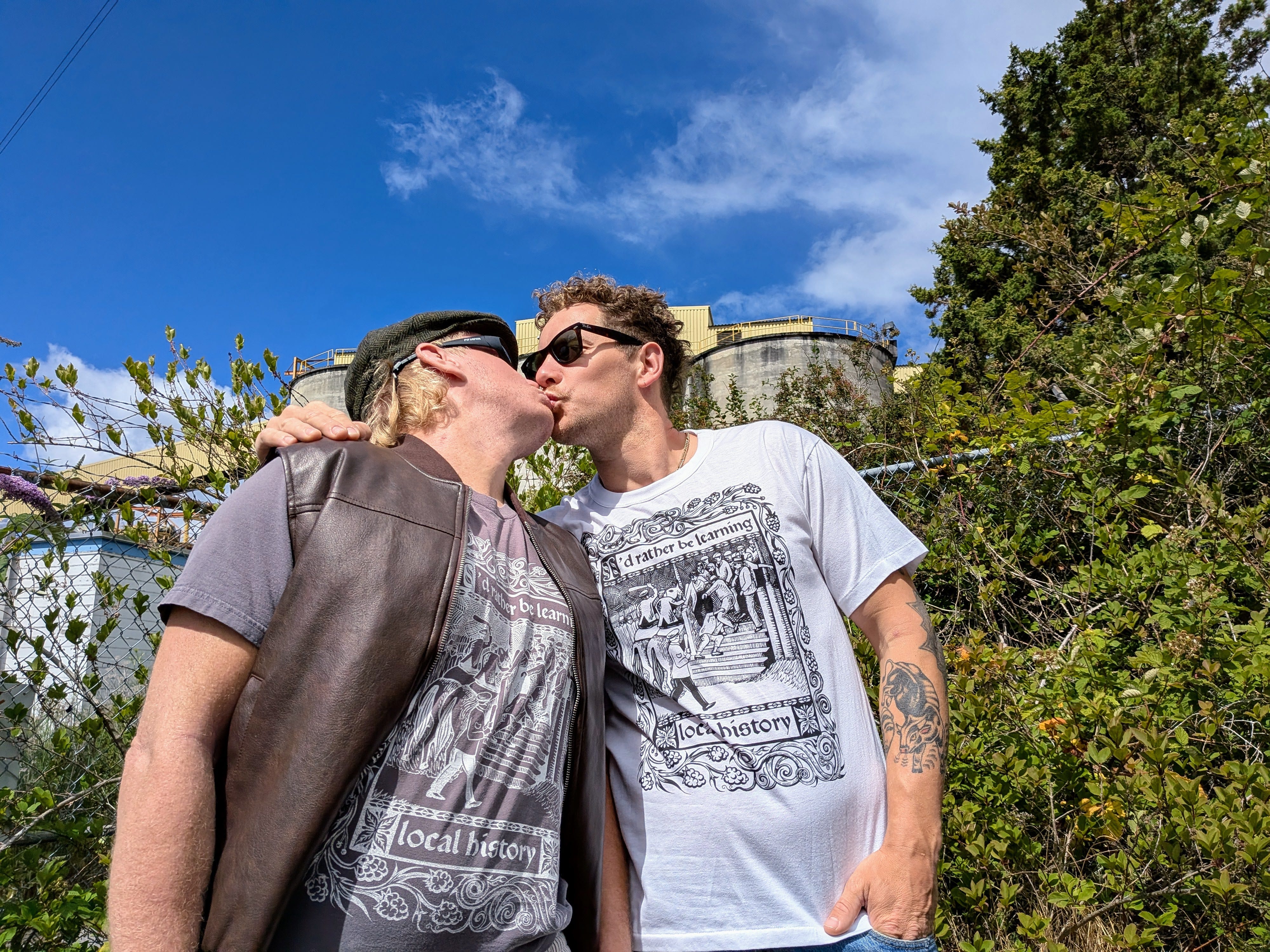
For anyone who didn't get one: the shirts are for sale at the qathet museum and archives. Get em while they last!
Thanks for the labour history. Should be required reading and included in high school curriculum. We know whose side the RCMP are on to this day.