


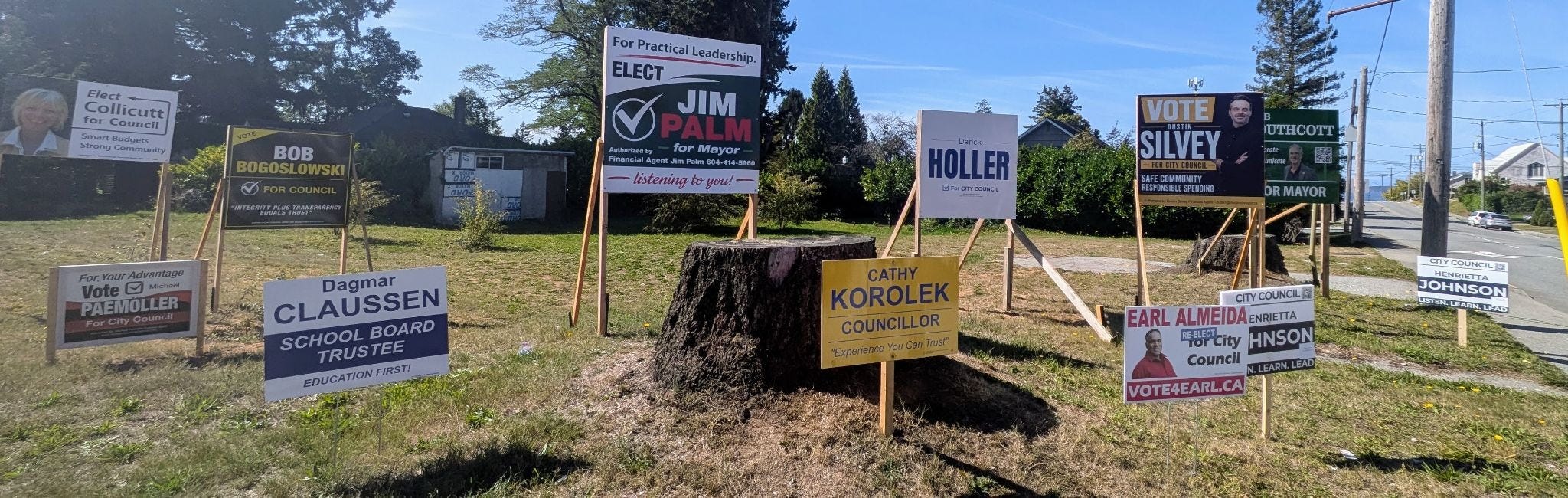
In Powell River’s last municipal election, over half of the city’s eligible voters didn’t vote. In a small community like ours, each of those wasted votes carries some real weight. There are six council seats, and the seventh-place candidate only lost by thirty-nine votes. In 2018, it was two votes. Margins are tight.
Still, it can be hard to feel like who gets into city hall matters all that much. Council meetings are dry and (if we’re being honest) most candidates’ campaigns are a little lackluster.
But don’t let that lull you into apathy. As a community, we’re facing some pretty serious problems - the loss of the paper mill and its associated tax revenue, decaying public infrastructure, and the skyrocketing cost of living, to name a few. Even if you don’t pay attention to politics, I’m sure you’ve noticed your creeping grocery bill or the growing number of people sleeping rough in city parks.
It’s not glamorous, but municipal policy can have a big impact on our daily lives.
At its most basic, it keeps the city machinery quietly humming - roads maintained, wastewater treated, and garbage collected.
But, at its best, municipal policy can do something about the issues we’re facing and make our collective lives easier. It can look like Tofino’s Housing Corporation, a municipal corporation tasked with building and managing below-market housing for its residents; Or, it can look like Ladysmith’s restoration of its historic downtown, revitalising the local economy and reducing car dependence; Or Kitimat providing free transit to youth eighteen and under; Or Prince Rupert’s municipally-owned telco, providing affordable service and generating millions of dollars in dividends, reducing residents’ property taxes.
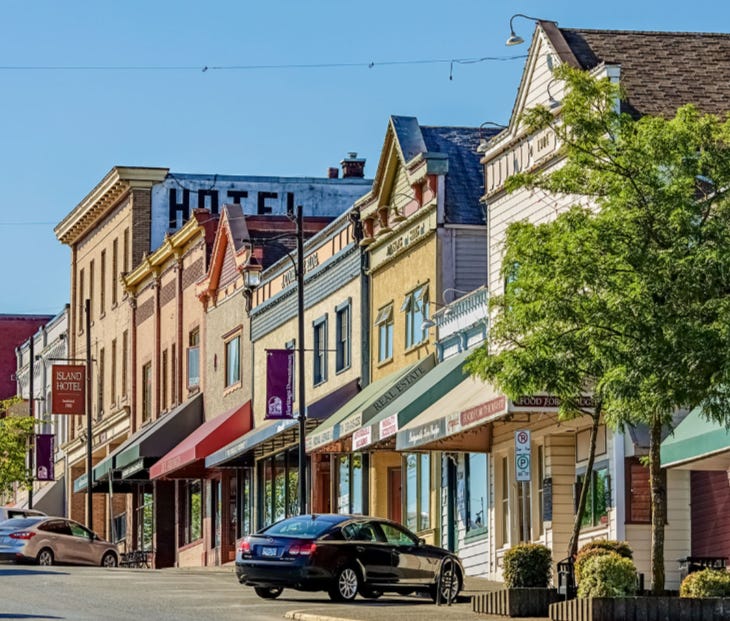
On the other hand, at its worst, municipal policy can look like austerity and the rollback of services. It can look like going ahead with the options for operational savings offered by city staff in Powell River’s Draft 1 2026-2030 Financial Plan - decommissioning the public pool, eliminating grants to local organisations, and cutting library hours and bus service; Or, it can look like Sayward, where conflict between its councillors has cost the municipality hundreds of thousands of dollars in legal fees, prompting residents to submit a formal petition to dissolve the municipality; Or Sechelt, whose council was recently described by an independent audit as “dysfunctional, acrimonious and inefficient.” Their mayor, John Henderson, has been censured by the regional district for yelling at staff and forbidden to engage with the shíshálh Nation as a representative of the municipality after distributing residential school denialist texts and objecting to a resolution his council unanimously supported, titled “Rejection of Residential School Denialism.”
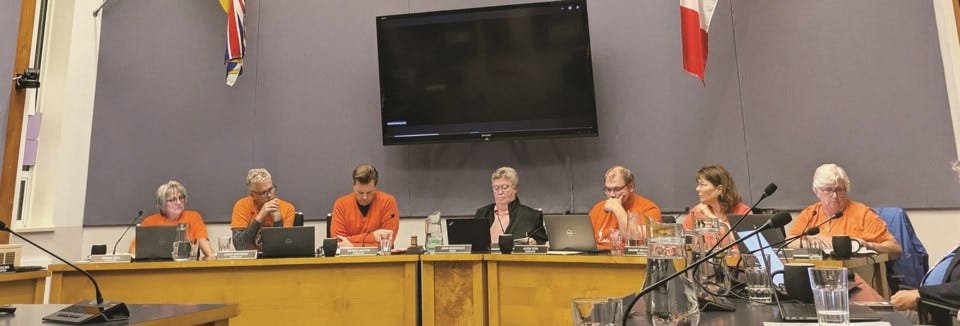
So, hopefully you’re marking October 17 (voting day) in your calendar and blasting texts to remind your friends. But showing up to vote’s just half the battle. With twenty-one candidates for city council and four for mayor, it begs the question - how’s a guy to choose?
If you’re feeling overwhelmed, I’ve got you. This guide is split into three handy sections; feel free to skip past all my hot takes if you just want to know who to vote for.
What’s the deal with Powell River?
Who should I vote for?
Who should I NOT vote for?
1) What’s the deal with Powell River?
I’m a sucker for the rule of three, so here’s my hot take on three of Powell River’s biggest election issues:
taxes
Some candidates have been getting fired up about the idea that Powell River has the highest property taxes in the province. While it’s true that we have one of the highest tax rates in the province, that’s just half of the equation (literally). When we apply the tax rate to property values, we get a more useful metric - how much tax we actually pay.
Which is a totally normal amount.
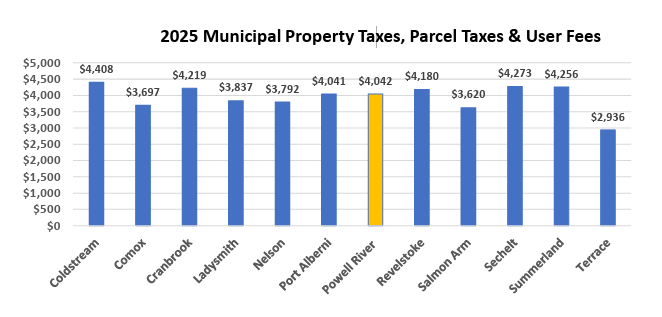
More importantly, if we care about affordability, cutting property tax is a red herring. On average, homeowners are ten to thirty times richer than renters. According to the city’s housing needs report, one in three renters spend thirty per cent or more of their income on housing each month. For homeowners, it’s only one in twenty. Overwhelmingly, it’s renters (not homeowners) who bear the brunt of the affordability crisis and stand to lose the most if council cuts funding to public transit, social services, and local organisations.
public safety
During the mill’s heyday in the 70s, Powell River had one of the highest per-capita incomes in Canada.
By all accounts, things have changed since then. The mill’s been shut down for years; there’s visible homelessness, open drug use, and leaving your car unlocked downtown can be a gamble. For a lot of people, things feel scary. In the words of Staff Sergeant Lee Dyson, “people are used to Powell River being a certain way, and unfortunately those times have passed.”
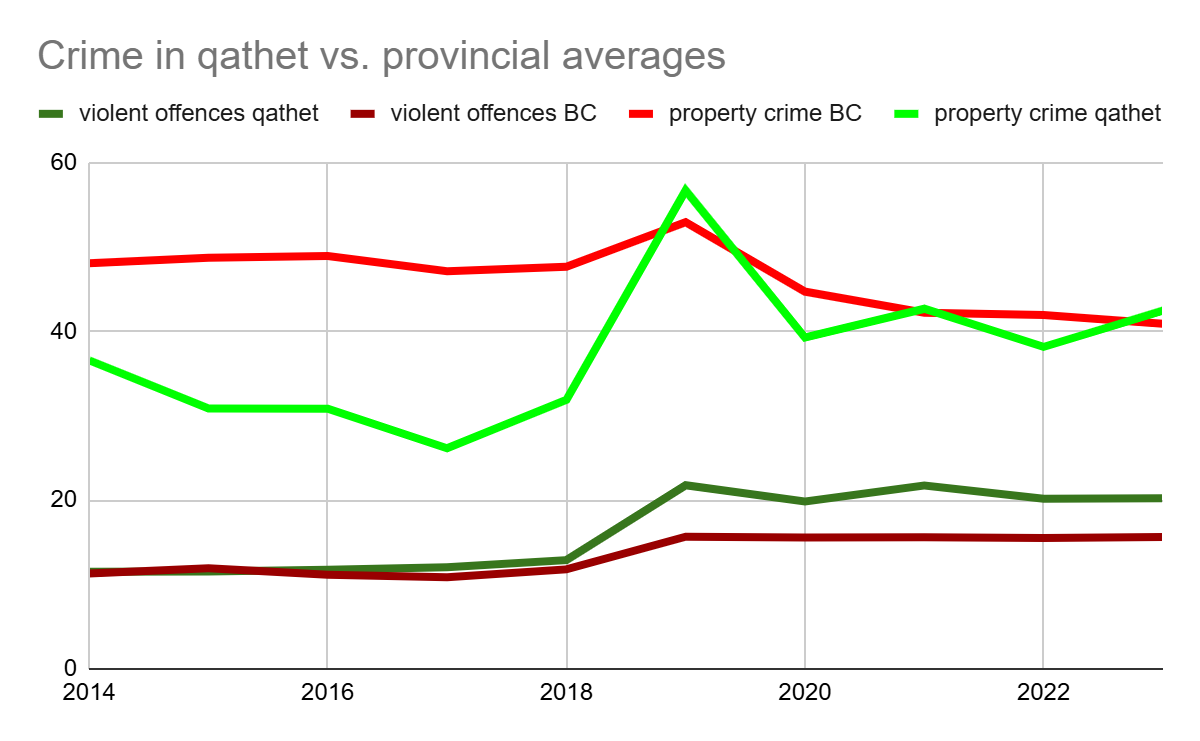
There’s some confusion about what’s caused the change. Are we witnessing the moral collapse of modern society? NDP harm reduction gone too far? Recently, mayoral candidate Jim Palm added weight to a popular theory during a council meeting, saying (without evidence) that the City of Vancouver was handing out thousand-dollar vouchers for homeless people to leave the city and move to Powell River.
Even if they can’t identify the cause, many candidates are positioning themselves as tough on crime. They want more police and bylaw enforcement (even though each additional RCMP member costs the city $227k per year). One candidate has built his entire campaign around the single issue of stopping a proposed shelter and supportive housing building from getting built on Joyce Ave.
Unfortunately, more cops and less housing isn’t going to solve the problem. There’s a reason why Powell River feels less safe than it used to:
We’re getting poorer.
In the 1996 census, Powell River’s median household income was $80,958 (adjusted for inflation). As of 2021, it’s dropped to $67,000.
Meanwhile, the cost of living has exploded. Food prices have doubled since the early 2000s. The cost of a house in town has tripled in just over a decade. Nearly two hundred households in our community spend more than half their income on housing.
Powell River’s (modest) increase in crime is a symptom, not cause, of community decline. I’m not the only one saying it - according to the Department of Justice, “social and economic disadvantage has been found to be strongly associated with crime.”
The hopeful thing is, our community still has a lot of wealth. It’s just not spread equally. Two classes have claimed most of it: billionaires and homeowners.
As the economy contracts, those who still have money have been pumping it into real estate. Net wealth held by homeowners in their principal residences across Canada has exploded by over eight hundred per cent in the last two decades (from $600 billion in 2000 to $5.8 trillion in 2023).
Billionaires are sucking up the rest. Jackson Wijaya, former owner of the tiskwat mill, is worth an estimated $28 billion.1 Jimmy Pattison, owner of the Town Centre Mall, is worth $12 billion. While times are getting harder for most of us, the forty richest Canadians have increased their wealth by $95 billion in the last year alone.
If we want to bring back the good ‘ole days in Powell River, we need to do a better job of spreading the wealth and looking after our neighbours.
collaboration
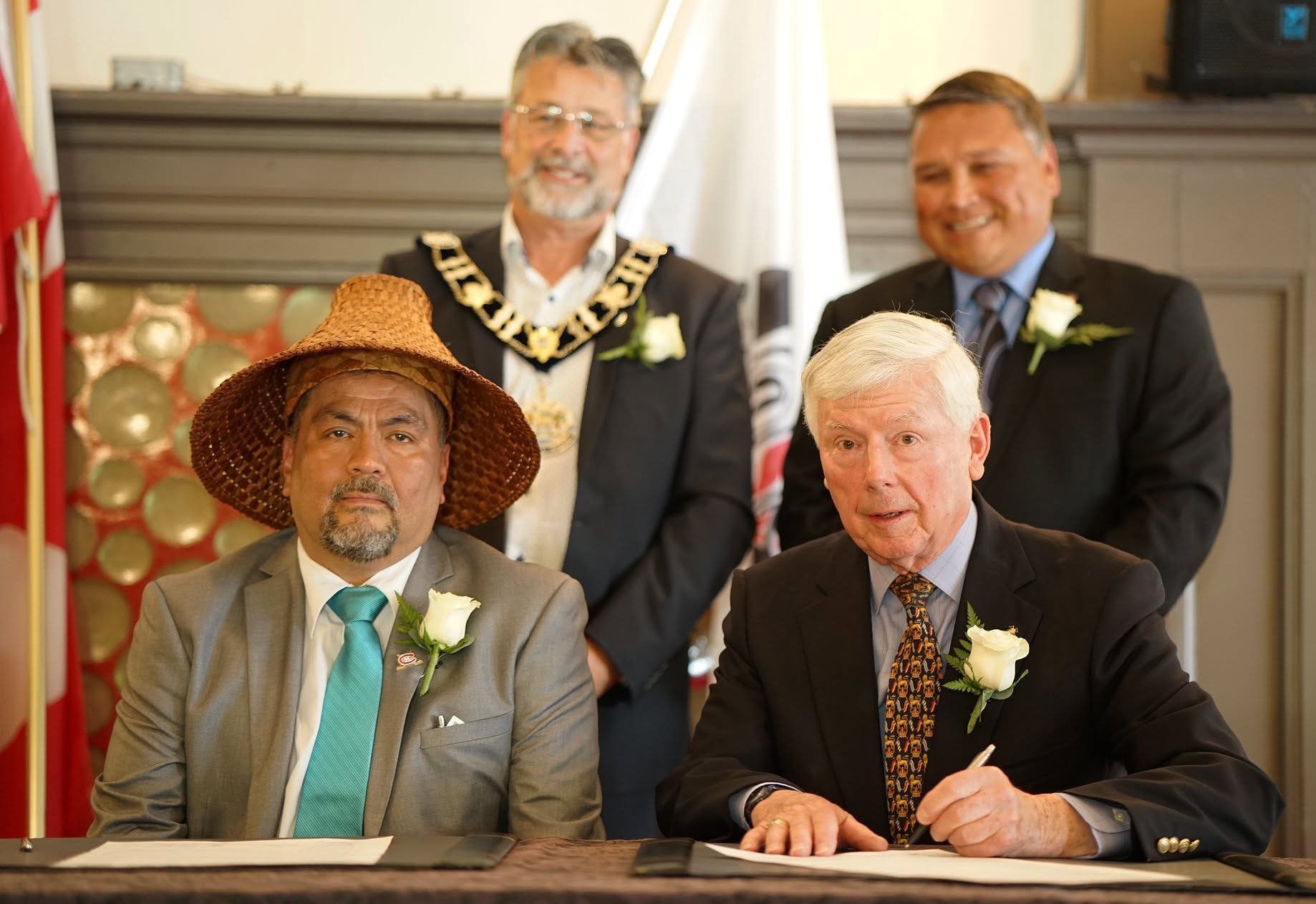
The City of Powell River, which has an operating budget of $53 million, is just one of three local governments. From public transit to communal resources like the library and rec complex, its jurisdiction intermingles with the qathet Regional District ($29 million operating budget) and Tla’amin Nation ($55 million operating budget). It would be an understatement to say, our region is strongest when local governments work together.
In 2003, long before anyone was complaining about wokeness, former Mayor Stewart Alsgard and Chief Councillor Maynard Harry signed a historic accord stating that “Powell River and Tla’amin deem recognition, understanding and reconciliation the foundation of their communities’ common good.” It committed that “the parties will form working groups, from time to time, to explore and initiate activities designed to facilitate economic diversification, to protect cultural heritage resources, to promote community growth, to increase investment and to generate employment.”
That’s how community-to-community-to-community (C3) meetings started and, for decades, our local governments have met on the regular.
Then, in 2024, Jim Palm made news for mocking the Tla’amin language in council chambers, prompting Tla’amin Nation to issue a press release saying:
“We don’t take mockery of our language lightly especially from a long-time schoolteacher and elected official. Our people were taught to be ashamed of our language through the exact behaviours demonstrated by Councillor Palm and worse. This has resulted in the near loss of our language.”
C3 meetings haven’t happened since.
Unfortunately, there are several candidates on the ballot who, like Palm, will likely deepen the divide between our communities; who explicitly aim to deny Tla’amin’s request that the city change its name. Council candidate Ted Vizzutti has gone so far as to demand the City withdraw from the Community Accord with Tla’amin, saying “their intentions are to harm, belittle, degrade, humiliate and put in our place and finally, erase.”
2) Who should I vote for?
*Disclaimer: this is a small town. I know and consider some (but not all) of the candidates friends. The views in this article are my own, and don’t necessarily reflect those of any candidate. If a candidate made my list, it means I think they will work well with others (especially across difference), understand how things work, and have relevant experience.*
Mayor: Rob Southcott
In the last election, Rob received more votes than any other candidate, with forty-six per cent of the vote. He’s served on council since 2014, understands how council works, and is the progressive candidate with the best chance of winning.
Council:
Earl Almeida
Incumbent. Has a solid track record and collaborates well with colleagues. Strongest on economic issues.Cindy Elliott
Incumbent. Has a detailed platform that includes creating a Housing Authority and climate change adaptation. An impressive resume includes service as the Regional Economic Development Officer for the Province of BC, and Acting Aboriginal Relations Manager for the BC Ministry of Forests.Trina Isakson
Incumbent. Is campaigning on affordable housing, good relations with Tla’amin Nation, and support for youth. Has an MBA in community economic development. We’d be lucky to have Trina as mayor someday.Paddy Treavor
Middle-of-the-road kind of guy. Has decades of experience in labour relations and on the front lines as a psychiatric nurse on Vancouver’s Downtown Eastside; seems to understand the complexities of homelessness and addiction. Currently serving as steward at large for BC Nurses Union.Jordie Yow
Is campaigning to “create homes and get help to those in need in our community, and continue the city’s support for the planned Joyce Avenue shelter.” One of the few candidates to explicitly support Tla’amin’s request to change the city’s name.
It’s worth noting that you don’t have to fill your ballot. If there’s only a handful of councillors you’re stoked on, you can just put their names down and leave the rest blank.
3) Who should I NOT vote for?
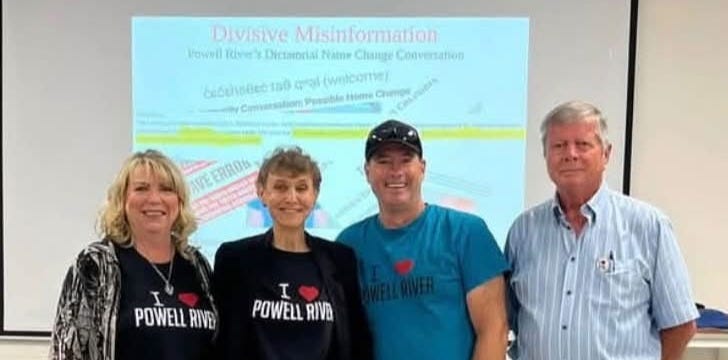
When a council isn’t capable of cooperating, things can get pretty messy. As the CBC described in a recent article:
“Since the 2022 local elections, a number of B.C. municipalities — including Kamloops, Harrison Hot Springs, Lions Bay, Sayward and Sechelt — have seen the mayor opposed by all or a majority of council.
Accusations of inappropriate conduct toward staff, multiple lawsuits, mass departures of senior staff or external investigations have followed, along with code of conduct complaints and escalating legal fees to resolve the personal disputes.”
In Powell River, a handful of candidates stand out as being particularly rigid, hateful, or dishonest and likely to contribute to a dysfunctional council. Those are:
Mayor: Jim Palm
In the last municipal election, Palm got hit with the biggest fine of any candidate in the province for eight contraventions of the Local Elections Campaign Financing Act.
Leading up to the election, Palm received campaign contributions from a handful of local companies and one numbered corporation. The problem is, donations are supposed to come from individuals, not organisations or businesses. When Elections BC informed Palm the donations were illegal, he responded by saying he’d returned them, filing “a supplementary report that included four 4306 Prohibited Campaign Contributions and Loans forms, affirming that the contributions had been returned to the organisations on February 8, 2023.”
It seemed like an honest mistake, and the initial investigation recommended a modest penalty. Except, a few months later, a follow-up investigation found that Palm had lied about returning the illegal contributions, stating:
“I have chosen to deviate from the Investigator’s recommended penalty range because I have taken specific note of the inaccurate nature of the four 4306 Prohibited Campaign Contributions and Loans forms that you filed, and the false assertions that you had previously made to Elections BC that you had returned the contributions. This is a significant aggravating factor to consider, and I find that it outweighs all of the mitigating factors considered above. As such, I am assessing the maximum penalty under section 68.17 for failing to return the contributions under section 28 of LECFA.”
Palm has other red flags, but this article is already long. So I’ll just quickly note his pattern of making offensive and divisive comments in council chambers (noteworthy enough to make the news in other cities - like this or this).
Council (strongly reject):
Diana Collicutt
Led the fight against the city’s traffic-calming safe streets program on Maple and Sycamore Ave. Spoke to council against the use of Dwight Hall as a temporary emergency weather shelter last winter. Strong NIMBY vibe.Darick Holler
Started a petition called “Save Powell River” to stop BC Housing’s emergency shelter and supportive housing on Joyce Ave from getting built. Singularly focused on this issue - in his words, “public safety is my number-one concern.”Cathy Korolek
Former vice-president of the Westview Ratepayers’ Society and member of their housing sub-committee, which has fought hard against supportive housing.Diane Sparks
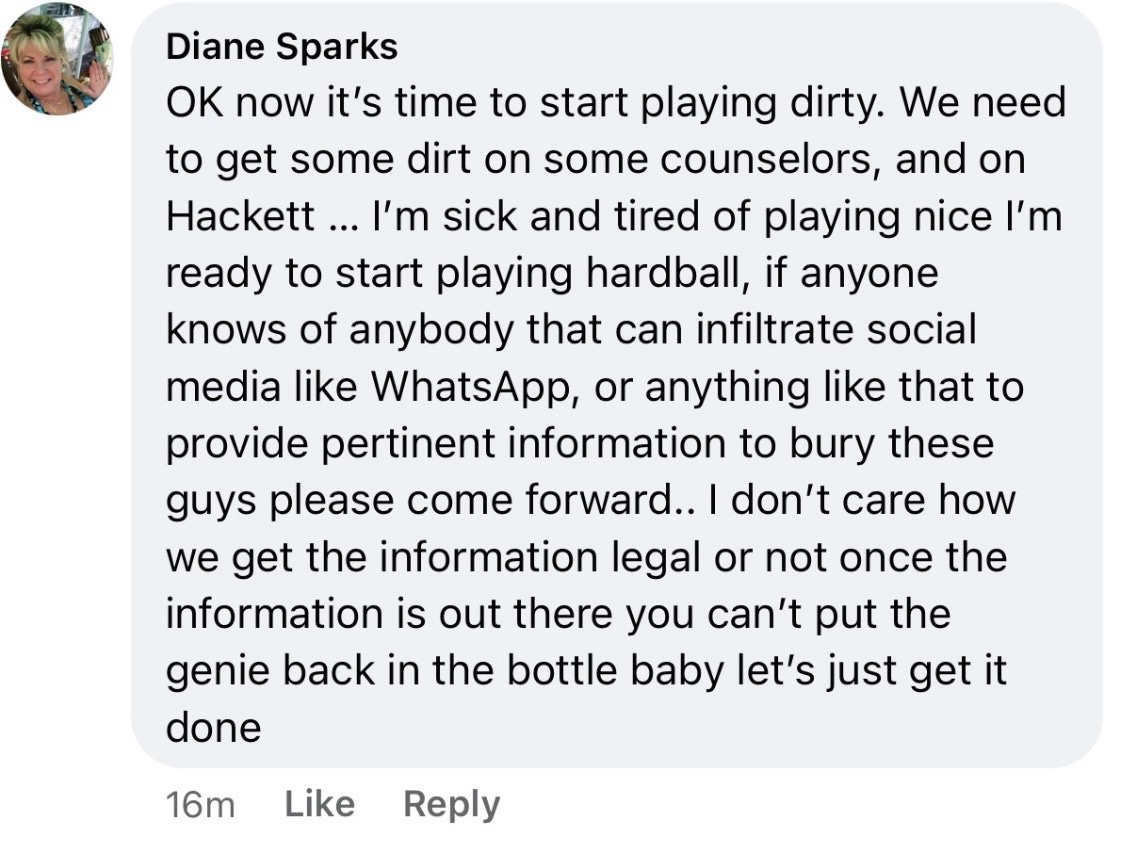
Former board member of the Westview Ratepayers’ Society. Leading anti-name-change activist. Has spoken before council to argue that “Tla’amin Nation is attempting to erase our ancestry, our history, the people from ‘Around The World’ that built the town of Powell River.”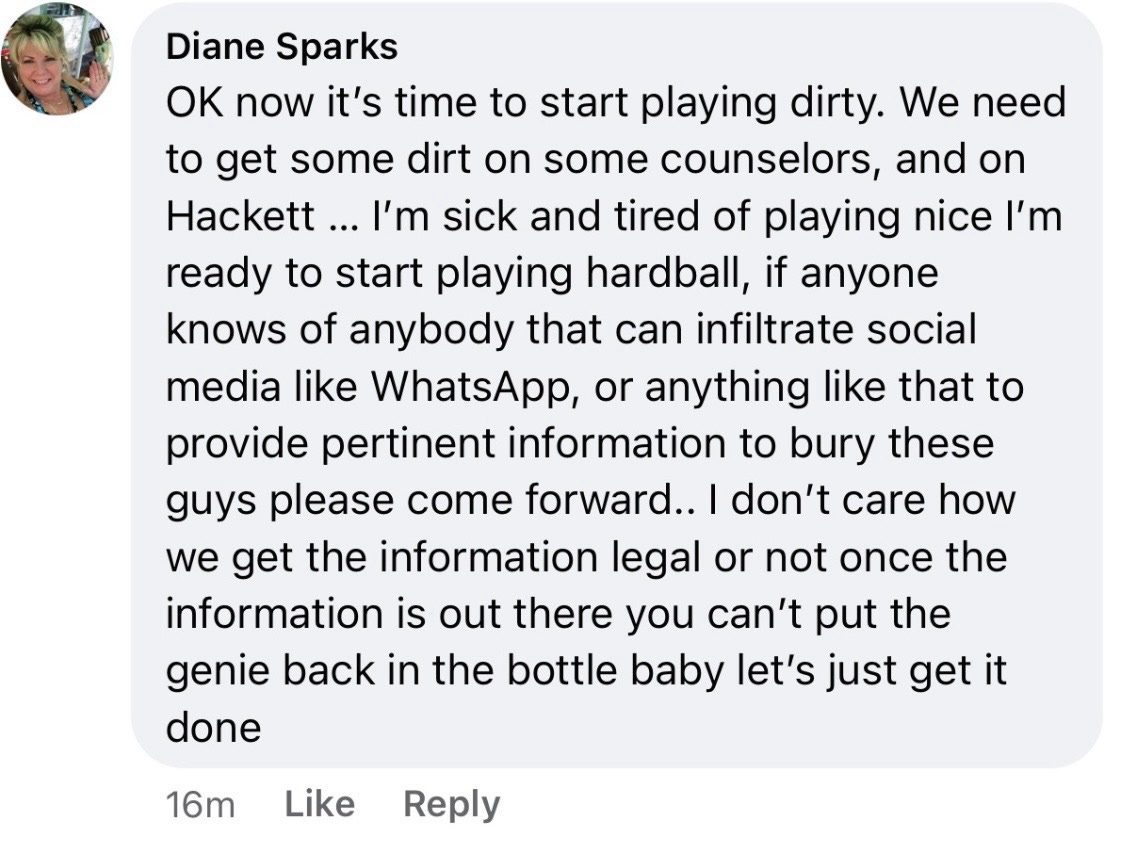
Screengrab from Diane Sparks’ Facebook page, circa March 2024. Ted Vizzutti
Former board member of the Westview Ratepayers’ Society. Forced to resign from his union job at BC Ambulance for his anti-Indigenous racism. Wrote to council demanding that the city “remove the native flag [from the ferry ramp] as they do not respect our city and they are not taxpayers that have paid for the flag pole.”
Bonus: school board trustees
On the ballot, we also have the option to elect five trustees to the qathet School District Board. Here are the four that I’ll be voting for:
Gretchen Conti
Incumbent. Former EA & D/PAC parent. Understands policies and how they translate to the classroom. Focus on digital literacy, outdoor education, climate change education, and academic excellence.Maureen Mason
Incumbent. Retired Inclusive Education teacher with a background in union work. Big-picture thinker who works to bring innovation and inquiry to the Board table.Jaclyn Miller
Incumbent. Works for the Ministry of Children and Family Development, campaigning on “continuing to prioritize vulnerable students, including children in care, students with diverse support needs, and Indigenous students.”Lynn Price
Retired teacher in public education. Committed to listening, working collaboratively and advocating for safety.
He’s also the former owner of the recently closed Crofton Mill, Howe Sound Pulp and Paper Mill, and Bayview Fibre.
Thank you for this! Curious if you caught Paddy’s remark at the Chamber of Commerce forum last night, that he’s against harm reduction and believes it leads to the kind of conditions seen in the DTES. Does that change your assessment of his candidacy?
Did any of these candidates sit down with younger voters to ask what their main issues are? They have just as much say in what city council should be focusing on over the next 4 years.
If they were asked about what they think our biggest issues are, you’d hear that they’re worried about climate change and how it’s affecting our forests and waterways. They’re concerned about unhoused people, why they’re not being housed and looked after. They’re scared of the toxic drug supply. They’re worried about getting a good enough job to be able to afford to stay here. And they’re struggling with the amount of racism and intolerance they are seeing.
Councillors represent the voices of everyone in our community, including younger voters and the Tla’amin Nation. If you’re unable to listen and work together, you shouldn’t be running at all.